Introduction
Importing a US‑spec vehicle to Germany often requires technical changes in addition to paperwork. A car that is road‑legal in the US can fail a German TÜV inspection because lighting standards and approval markings differ. The most frequent adaptations — converting headlights to an ECE beam pattern, switching rear indicators to amber, and installing a rear fog light — typically speed up TÜV approval and reduce follow‑up corrections. Exact requirements, costs and timeframes depend on the model, the lighting design and whether a Certificate of Conformity (CoC) exists. This article explains each modification, realistic costs, typical timelines and how a turnkey service can manage the whole process.
Three lighting modifications TÜV checks most often
- Headlight conversion to ECE beam pattern and ECE marking
- Replacement or modification of rear indicators to amber (orange)
- Installation of at least one rear fog light (as required in Germany)
These changes help meet EU/German visibility and safety standards and lower the risk of a failed inspection or lengthy additional repairs.
Headlight conversion — what’s required and why
US headlight assemblies are commonly designed for left‑hand traffic and frequently lack ECE approval markings or the correct beam cutoff for right‑hand traffic. On a TÜV inspection this appears as an incorrect beam pattern or excessive glare for oncoming drivers.
Common technical approaches
- Adjustment or bulb replacement where the existing optics allow — the least invasive option.
- Addition of beam deflectors, shutter inserts or corrective units to reshape the beam for right‑hand traffic.
- Full replacement with ECE‑approved assemblies when adaptation is not feasible.
Estimated cost (parts + labour): approximately €800–€1,500, depending on model complexity and parts availability. Large US pickups and rare models without European equivalents (for example, many Ford F‑150 variants) often require full replacement; when no CoC exists this work is frequently part of the individual approval (§21 / Einzelabnahme) dossier. Learn more: 5 Biggest Mistakes When Registering a US Car in Germany — practical pitfalls and solutions.
Amber indicators — why Germany requires them and how to fix it
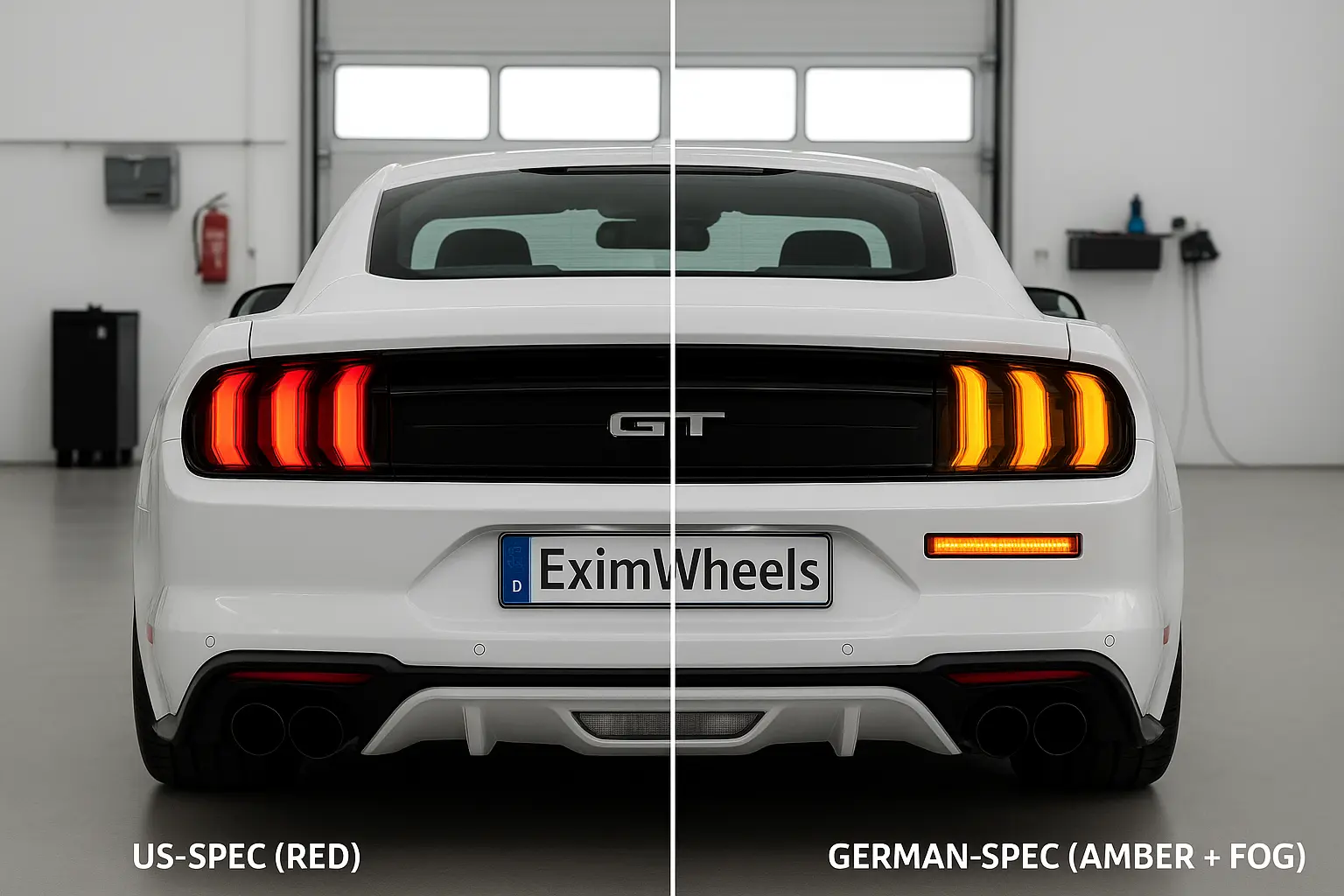
Many US rear lamps use red or combined colours for indicators, while EU regulations require turn signals to display amber (orange) light. TÜV checks indicator colour, intensity and correct wiring.
Typical solutions
- Replace rear lamp clusters with OEM or aftermarket EU versions that include amber indicators.
- Replace LED modules or lenses to amber where lamp construction permits.
- Perform electrical modifications or rewiring when necessary to ensure correct signalling behaviour.
Typical cost: €300–€600 depending on lamp design, parts access and labour. These works are commonly combined with other rear‑end adaptations to avoid further TÜV remarks. For a real client example and step‑by‑step timeline see our Dodge RAM case: Dodge RAM → TÜV → Registration in 3 Weeks.
Rear fog light — mandatory requirement and install details
German regulations generally require at least one rear fog light on passenger cars; many US versions omit this lamp. TÜV will record absence of a rear fog light as a non‑conformity.
Typical installation tasks
- Mount an approved rear fog lamp at an acceptable position and securely fix it to the bumper or body.
- Route wiring and add the control switch/indicator on the dashboard as required.
- Seal mounting points and test for water ingress and electrical safety.
Estimated cost: €200–€400. Rear fog light installation is often done together with indicator work to reduce total labour and ensure a clean TÜV check. For hidden costs and example calculations across several models see Real Costs of Registering Popular US Collector Cars in Germany.
Practical checklist before the workshop or pre‑import
- Collect all documents: title, bill of sale/invoice, transport papers, registration papers and CoC if available.
- Photograph front and rear lamps, the instrument cluster and any switches for fog lights.
- Confirm model, year and variant with the service to check parts availability.
- Decide whether you want only technical modifications or a full §21 individual approval (Einzelabnahme) package.
- Book TÜV inspection and a Zulassungsstelle appointment in advance where possible.
A turnkey provider can coordinate these steps, order parts, perform conversions and attend TÜV to avoid multiple trips.
Realistic timelines
- Formal registration at the Zulassungsstelle after approvals and paperwork are in order typically takes 2–3 working days; allow up to one week for administrative processing or busy periods.
- Individual approval (§21) and the required conversions can take several weeks and, in complex cases, up to 1–2 months depending on TÜV availability, parts lead times and the extent of adaptations. Plan buffer time for rare or heavily modified vehicles.
Historic vehicles and H‑registration
H‑registration (Historic / H‑plate) is for vehicles that are at least 30 years old, preserved in largely original condition and of historic interest. Benefits may include reduced tax and insurance options, but an imported classic still usually needs TÜV verification and often a §21 individual approval for first registration. Confirm historic status and documentation with a certified expert before import. For procedural guidance see How to Register a US Car in Germany: Step‑by‑Step Guide.
Alternative to importing your US car — buy a European vehicle ready for Germany
If driving your American car in Germany is not essential and you are only planning your relocation, there is a simpler option: purchase a European‑spec car that already complies with all local regulations. With our expat car service called “StandBy Auto” we can provide a full package — from car sourcing in Germany, pre‑purchase inspection and VIN documentation, to purchase, registration and insurance.
Instead of dealing with headlight conversion US car Germany ECE, amber indicator retrofit, or rear fog light installation, you can choose a vehicle that is already compliant and avoid the hidden costs of importing a US car to Germany.
We handle the entire process:
- Selecting the right model that fits your budget and lifestyle.
- Checking all paperwork and documents for registering a car in Germany.
- Completing registration and insurance so the car is ready to drive.
- Delivering the vehicle directly to you — from runway to highway.
This turnkey solution is ideal for expats who value time and convenience, want to avoid technical modifications, and prefer a car that is ready the moment they arrive.
Book the StandBy Auto service now.
FAQ — concise and precise
Q: How long does registration take after modifications and approval?
A: With completed approvals and documents, formal registration usually takes 2–3 working days; up to one week in rare administrative delays.
Q: How long can §21 (individual approval) and conversions take?
A: From a few weeks to 1–2 months and more in complex cases.
Q: Do all US cars need the same conversions?
A: No. Required work depends on model, equipment and CoC availability; some cars need only minor adjustments, others substantial retrofits.
Q: What is H‑registration?
A: H‑registration is for historic vehicles alsp oftenly calle “old timers” (typically 30+ years old) and offers tax and insurance benefits, but initial registration of imported classics still needs TÜV/§21 verification.
Q: What hidden costs should I expect?
A: Shipping, customs/duties, translation/notarisation, temporary insurance and plates, parts and labour variability, and possible repairs discovered during inspection.
Conclusion
If you plan to import a US vehicle to Germany, prepare documentation, budget for common lighting adaptations and consider a turnkey service to reduce risks, timelines and unexpected costs. Send VIN and photos for a preliminary evaluation — you’ll receive a clear plan, cost estimate and expected timeline.