Passing TÜV with an American import requires tackling five key areas. You need to match German standards precisely to avoid unexpected rejections.
1. Lighting
It requires a distinct light‐dark cutoff and correct signal colors. You need European-spec H4 or H7 bulbs, front white or amber indicators, red rear signals, plus side reflectors and proper beam aiming.
2. Exhaust and Emissions
It requires noise levels below the legal limit and a working catalytic converter. You need a TÜV-approved silencer or muffler, no leaks or rust, and functioning oxygen sensors to pass the sound and emissions tests.
3. Suspension and Steering
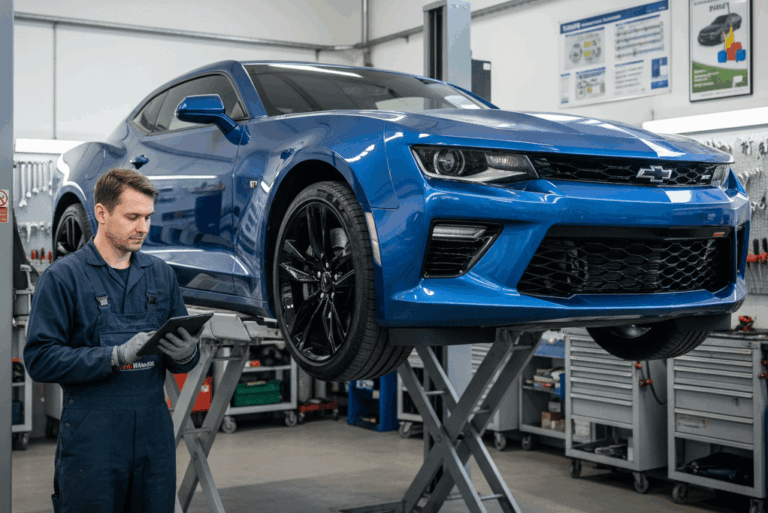
It requires tight, play-free joints and TÜV-certified lift or drop kits. You need to replace worn tie rods, bushings, or shocks, then get a professional alignment before inspection.
4. Brakes and Tires
It requires even pad wear, rotors in good condition, and at least 1.6 mm tread on correctly rated tires. You need matching brake pads/rotors front and rear, fresh brake fluid, and tires with the original load index and speed rating.
5. Documentation and Homologation
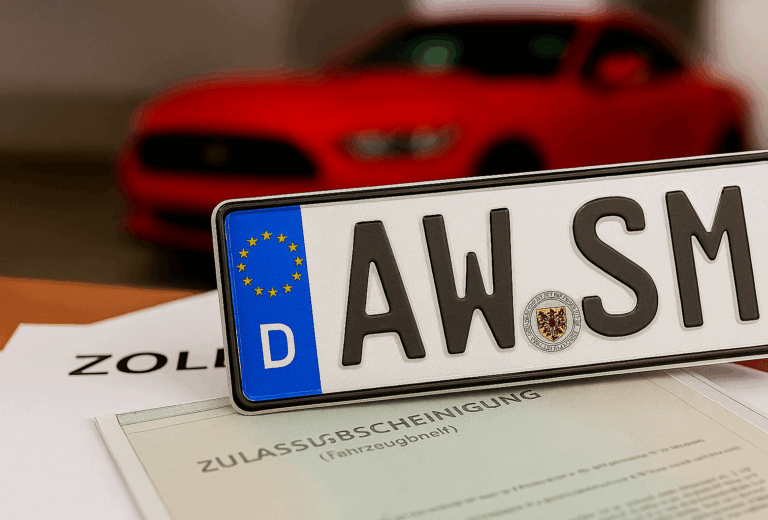
It requires EC type-approval or a §21 Einzelabnahme certificate and certified German translations. You need original U.S. title, manufacturer technical data, and sworn translations ready before your appointment.
By checking these five points in advance—lighting, exhaust, suspension, brakes, and paperwork—you’ll turn a nerve-racking TÜV visit into a smooth, first-try success.